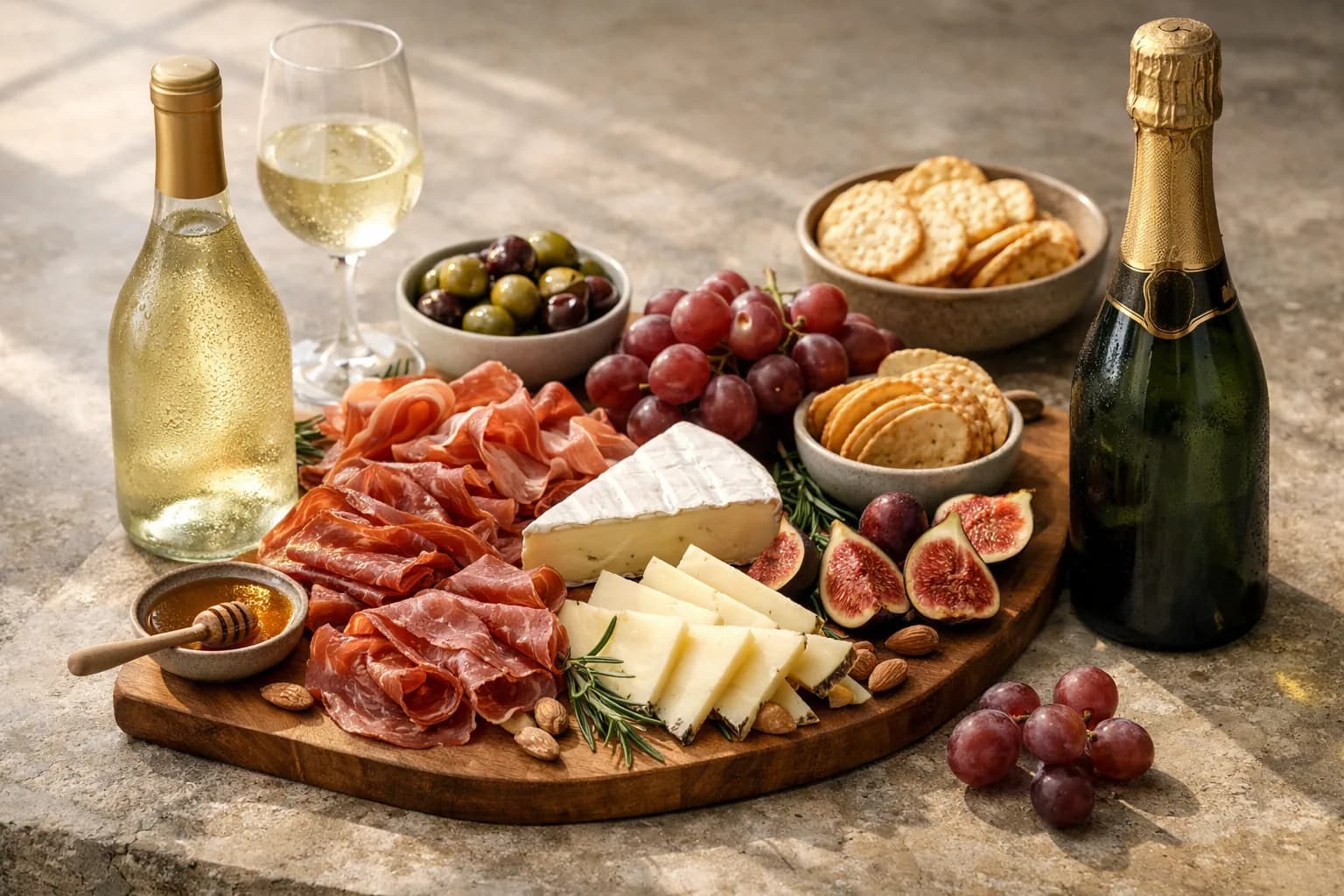
If you searched best wine for charcuterie board, you probably want a bottle that works with salty meat, rich cheese, and the random pickles or olives someone always adds at the last minute. The good news is that charcuterie is one of the easiest things to pair once you stop trying to match every ingredient separately.
The simplest rule is this: start with acid, then match richness. A wine with enough freshness can handle salt, reset the palate between bites, and keep the board from feeling heavy.
What Charcuterie Pairing Really Means
When people search what wine goes with charcuterie, they are usually asking for a bottle that can do a lot of work without getting loud. A good pairing should handle three things:
- Salt from cured meats and cheeses
- Fat from brie, gouda, or soft spreads
- Bright extras like mustard, cornichons, dried fruit, or citrusy jams
That is why the best wine for charcuterie board setups is rarely the most tannic red on the shelf. You want freshness, balance, and enough structure to stay interesting bite after bite.
The Short Answer: Start With Sparkling, Then Move Outward
If you only buy one bottle, choose sparkling wine. If you want more flexibility, build from there.
1. Sparkling wine for almost everything
Sparkling wine is the safest answer because bubbles and acidity clean up the palate. It works especially well with:
- Prosciutto
- Aged cheddar
- Brie
- Marinated olives
If you want a simple place to start, the sparkling section is the most forgiving lane on a mixed board.
2. Crisp white wine for salt and cream
A dry white is the next best move when the board leans creamy or briny. Cakebread Cellars Sauvignon Blanc is a strong example because its acidity keeps cheese from feeling heavy.
This lane is especially good for:
- Goat cheese
- Fresh goat or sheep cheeses
- Salty crackers
- Pickled vegetables
3. Light red wine for meat-forward boards
If your board is built around salami, soppressata, and firm cheeses, a lighter red makes sense. Martin Ray Sonoma Coast Pinot Noir gives you enough fruit and structure without overpowering the board.
Use a light red when the board includes:
- Salami and fennel sausage
- Manchego or aged gouda
- Mushrooms or roasted nuts
- Smokier cured meats
4. Textured white or savory red for richer boards
When the board feels more like a small meal, WALT Sonoma Coast Chardonnay or Marimar Estate Don Miguel Vineyard Tempranillo can carry more weight.
Choose this lane if the board includes:
- Brie or triple-cream cheese
- Smoked almonds
- Fig jam
- Roasted peppers or paprika-spiced meats
A Simple Charcuterie Pairing Map
Use this as a fast decision guide when you are standing in front of the shelf:
| Board style | Best wine style | Why it works |
|---|---|---|
| Prosciutto, olives, and briny cheese | Sparkling wine | Bubbles refresh the palate and keep salt in check |
| Brie, fig jam, and crackers | Dry white or textured Chardonnay | Acid cuts cream and keeps the board bright |
| Salami, manchego, and nuts | Pinot Noir | Light red fruit works with savory fat without overwhelming it |
| Smoked meats and paprika snacks | Tempranillo | Savory depth matches spice and cured flavors |
If your board mixes everything, default to sparkling. It is the least likely bottle to fight with the food.
How to Build a Board That Makes the Wine Easier
The easiest charcuterie board is not the biggest one. It is the one with enough contrast to make the wine obvious.
Use this formula:
- One creamy cheese
- One firm cheese
- One salt-forward meat
- One fresh or acidic element
- One sweet accent, like grapes or fig spread
That mix gives the wine room to work. It also keeps guests from getting stuck on a single flavor direction.
If the board is heavy on salt and fat, choose a wine with more acidity. If the board has more sweet extras, stay away from very dry, very tannic reds.
What to Skip When You Want the Board to Work
There are a few common mistakes that flatten a good charcuterie spread:
- Picking only heavy reds
- Serving wine too warm
- Ignoring the pickles, mustard, and jam on the board
- Using one cheese style from end to end
A better approach is to match the bottle to the board’s balance, not to the most expensive item on the tray.
Reno Strategy: Keep One Charcuterie Bottle on Hand
If you host often, keep one bottle from each lane ready to go:
- One sparkling bottle for mixed boards
- One crisp white for creamy or salty spreads
- One light red for meat-heavy boards
That rotation covers birthday boards, pre-dinner snacks, and last-minute hosting without a separate shopping trip every time.
Final Takeaway
The best wine for charcuterie board setups is the one that keeps the board moving. Sparkling wine is the safest all-around choice, crisp white wine handles cream and salt, and light red wine works when the meats and cheeses are doing the heavy lifting.
If you are shopping in Reno, start with the current shop selection, then use the events calendar to taste before your next hosting night.