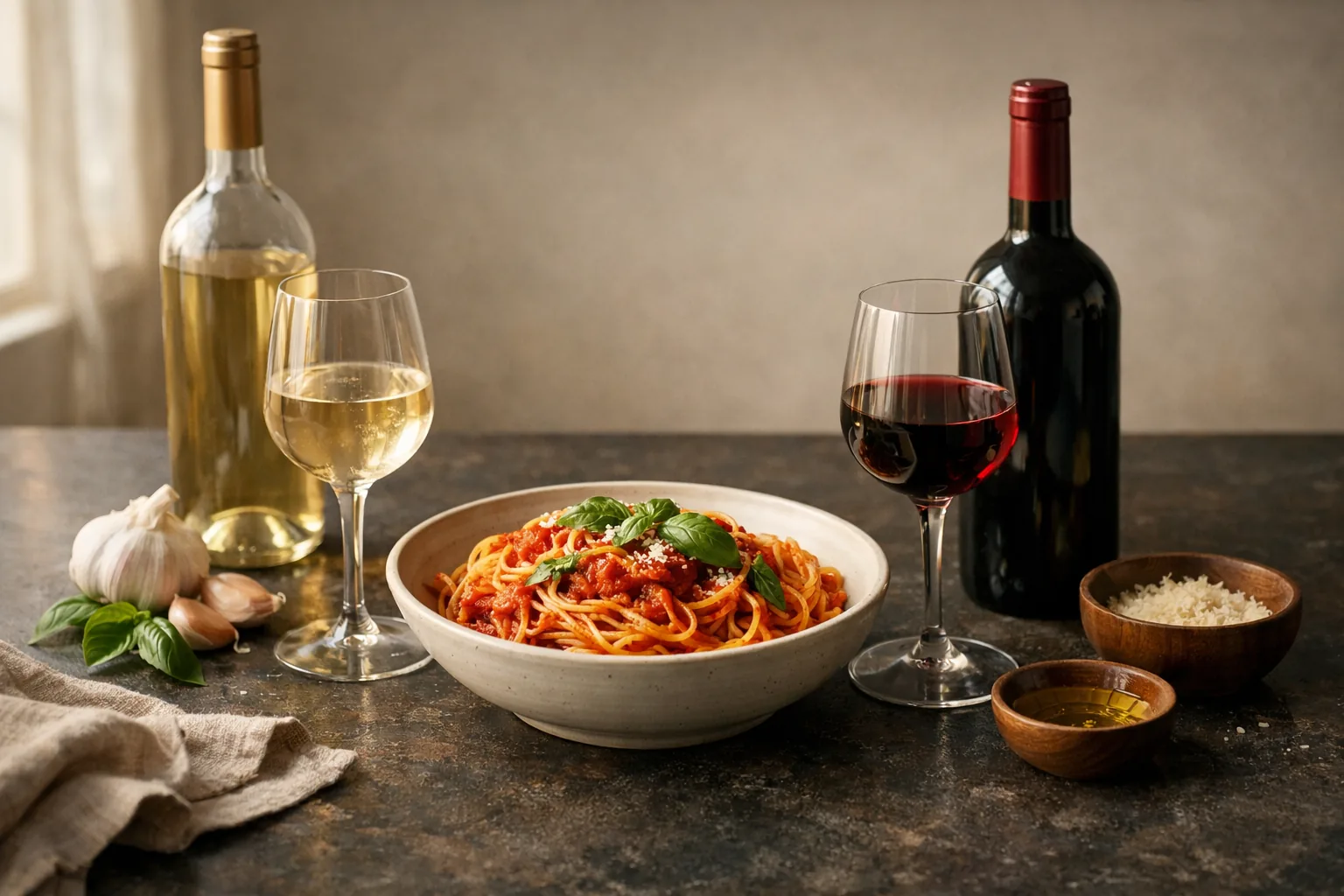
If you searched what wine goes with pasta, you probably want a bottle that fits dinner tonight, not a lecture about Italian regions. Pasta is really a sauce question, which makes the answer easier than it looks.
Start with the sauce, then choose the wine.
Start With the Sauce, Not the Noodle
The best answer to what wine goes with pasta changes once you know whether the pasta is dressed in tomato, cream, pesto, or seafood. A simple spaghetti with marinara and a rich carbonara do not want the same bottle.
Use this order when you shop:
- Identify the sauce first.
- Match acidity or texture second.
- Use the bottle to keep the meal balanced, not heavy.
That is why a pasta pairing guide works better when it is sauce-first instead of grape-first.
Tomato Sauce Wants Bright Acidity
Tomato-based dishes usually need a wine with enough lift to stand up to the acid in the sauce.
Good fits include:
- Marimar Estate Don Miguel Vineyard Tempranillo for marinara, arrabbiata, and red sauce with a little spice
- Martin Ray Sonoma Coast Pinot Noir for lighter tomato sauces, meatballs, and weeknight pasta
Why these work:
- Tempranillo brings structure without feeling heavy
- Pinot Noir stays fresh enough for tomato but still has enough character for a real meal
- Both bottles keep the sauce from tasting sharper than it should
If the pasta has sausage, mushrooms, or braised meat, lean a little bigger. If it is a simple tomato basil dish, stay lighter and brighter.
Cream Sauce Wants Texture, Not Weight
Cream sauces need a wine that can sit beside richness without disappearing.
The cleanest answer is:
- WALT Sonoma Coast Chardonnay for Alfredo, carbonara, mushroom cream sauce, and anything with butter or Parmesan
Chardonnay works here because it has enough texture to stay present, but still enough acidity to keep the meal from feeling flat.
If the cream sauce is especially rich, a sparkling wine can also work well. The bubbles reset the palate between bites and keep the plate moving.
Pesto and Herb Sauces Want Freshness
Pesto is bright, herbal, and usually a little oily. It needs a wine that feels clean and lively rather than broad.
The best fit is:
- Cakebread Cellars Sauvignon Blanc for basil pesto, pesto chicken pasta, and green vegetable pasta
Why it works:
- Sauvignon Blanc mirrors the herbal side of the dish
- Citrus and acidity cut through the oil in the sauce
- The pairing stays crisp from the first bite to the last
If the pesto includes pine nuts, spinach, or peas, this style usually stays even more useful.
Seafood Pasta Wants the Lightest Touch
Seafood pasta usually tastes best with the freshest bottle on the table.
Good lanes:
- Sauvignon Blanc for lemon, shellfish, or garlic-heavy seafood pasta
- Chardonnay if the sauce is a little creamier
- sparkling wine if you want the cleanest possible finish
This is the easiest lane to overdo. If the wine is too heavy, it can flatten the dish. Keep it bright and simple.
What to Skip When You Are Pairing Pasta
Some bottles make pasta harder than it needs to be.
Skip:
- very tannic reds for delicate sauces
- high-oak bottles that drown out herbs or tomato
- overly sweet wines unless the dish is actually built around sweetness
The goal is not to find one universal bottle for every pasta. The goal is to keep the sauce and the wine in the same lane.
A Fast Reno Pasta Night Shortlist
If you need a quick answer tonight, use this shortcut:
- Tomato sauce or bolognese: Tempranillo or Pinot Noir
- Cream sauce or carbonara: Chardonnay
- Pesto or herb sauce: Sauvignon Blanc
- Seafood pasta: Sauvignon Blanc or sparkling wine
That is enough to solve most pasta dinners without turning shopping into a project.
Final Takeaway
When people ask what wine goes with pasta, the answer is usually the sauce.
- Tomato sauces want brightness and structure
- Cream sauces want texture
- Pesto and seafood pasta want freshness
If you are ready to shop now, start with the current bottle selection. If you want to compare styles first, use the events calendar to taste before you buy.