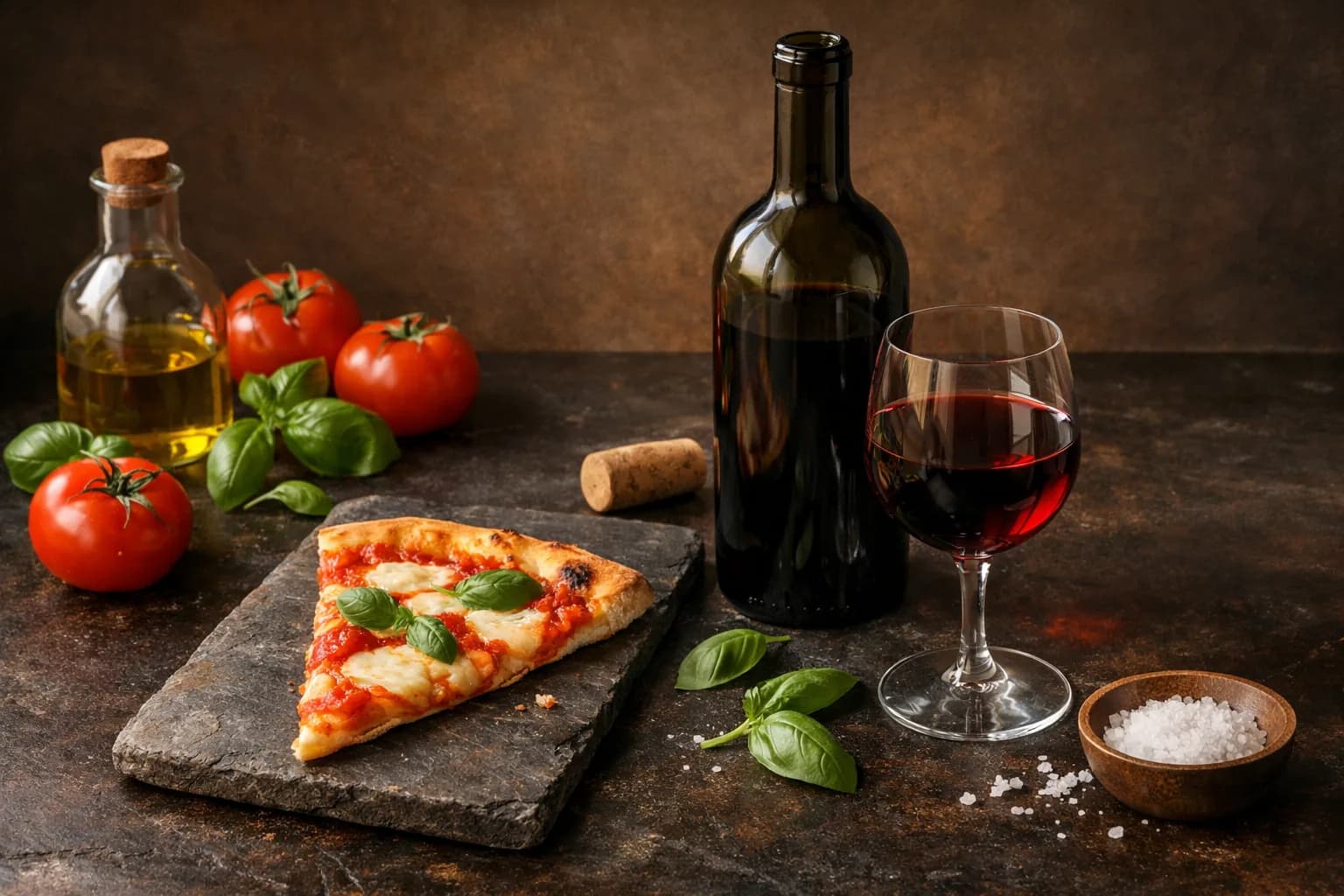
If you searched best wine for pizza, you probably want one bottle that can handle tomato sauce, melted cheese, and whatever toppings the table ends up ordering. Pizza is flexible, but it still rewards a little structure.
The simplest answer is to start with freshness. A wine with enough acidity can keep tomato bright, reset the palate between bites, and stay balanced when the cheese gets heavy.
Pizza Is a Sauce-and-Fat Problem
When people ask what wine goes with pizza, they are usually trying to solve three things at once:
- Tomato acidity
- Melted cheese and creaminess
- Topping weight, from pepperoni to mushrooms to herbs
That is why the best wine for pizza is rarely the heaviest red on the shelf. You want enough lift to keep the slice moving, not a bottle that flattens the flavors.
Start With Sparkling
If you only buy one bottle, sparkling wine is the safest default. The bubbles make tomato taste cleaner and help richer slices feel less heavy.
Sparkling works especially well with:
- Margherita
- Plain cheese
- Pepperoni
- Sausage
- White pizza
If you want a retail shortcut, the sparkling collection is the easiest place to start.
Best Wine by Pizza Style
Margherita and plain cheese
Sparkling wine is the cleanest match here, but a bright white also works. Cakebread Cellars Sauvignon Blanc gives you enough acidity to keep tomato and mozzarella from feeling flat.
Use this lane when the pizza is simple and the crust matters as much as the topping.
Pepperoni, sausage, and meat lovers
This is where a lighter red starts making sense. Martin Ray Sonoma Coast Pinot Noir brings red fruit and structure without burying the slice.
If the pizza leans a little spicier or smokier, Marimar Estate Don Miguel Vineyard Tempranillo has enough savoriness to keep up.
Mushroom, truffle, and veggie slices
Earthy toppings usually like wines with a little texture and shape. WALT Sonoma Coast Chardonnay is a strong fit because it has enough body for mushrooms, roasted vegetables, and creamy sauces without taking over the plate.
If the pizza is tomato-based but still vegetable-heavy, Sauvignon Blanc also stays in the conversation.
White pizza and four cheese
This is where many people go too heavy. Creamy pizzas need a bottle with enough freshness to cut through richness.
Best lanes:
- Sparkling wine
- WALT Sonoma Coast Chardonnay
If the pie has garlic, ricotta, or herbs, Chardonnay usually gives you the better middle ground.
A Fast Pizza Pairing Map
Use this as a quick ordering guide:
| Pizza style | Best wine style | Why it works |
|---|---|---|
| Margherita or cheese | Sparkling wine | Keeps tomato bright and cheese fresh |
| Pepperoni or sausage | Pinot Noir | Enough fruit and structure for salt and fat |
| Mushroom or veggie | Chardonnay | Handles earthiness and roasted flavors |
| White pizza or four cheese | Sparkling wine or Chardonnay | Cuts richness without getting loud |
| Spicy pizza | Tempranillo | Savory depth keeps up with heat |
If you want one bottle that covers most pizza nights, Pinot Noir is the most forgiving still-wine option.
What to Skip
Some wines make pizza harder than it needs to be.
Skip:
- Very tannic reds with a lot of oak
- Sweet bottles that fight with tomato
- Heavy wines that make the cheese feel thicker
Pizza usually does better with balance than power. The goal is to keep the slice and the glass moving together.
Reno Shortcut for Pizza Night
If you are shopping in Reno, keep the decision tree short:
- Need one universal bottle? Start with sparkling.
- Ordering pepperoni or sausage? Pick Pinot Noir.
- Ordering white pizza? Pick Chardonnay.
- Want one bottle with a little more spice-friendly depth? Pick Tempranillo.
That approach gets you through most takeout nights without overthinking the shelf.
Final Takeaway
When people ask what wine goes with pizza, the answer depends on the slice, but the pattern is simple:
- Sparkling wine is the safest all-around choice
- Pinot Noir works for pepperoni, sausage, and most meat-heavy pies
- Chardonnay and Sauvignon Blanc handle lighter or creamier pizzas well
If you are ready to shop now, start with the current bottle selection. If you want to compare styles first, use the events calendar to taste before you buy.